



F-PDX®: Japanese Patient-derived tumor xenograft
Patient-derived xenografts (PDX) are established by transplanting human tumor fragments directly into immunodeficient mice. By allowing the tissue to grow in a biological environment rather than a culture dish, PDX models preserve the original tumor properties and microenvironment. They are widely recognized as one of the most effective tools for assessing the efficacy of new anticancer agents before moving into clinical trials.
The F-PDX® library includes 274 validated lines mainly derived from Japanese patients (F-PDX® list). This collection represents a broad range of cancers, including lung, colorectal, and ovarian solid tumors, as well as hematopoietic malignancies like leukemia and multiple myeloma. Each line undergoes rigorous histopathological review and gene expression analysis to ensure it retains the characteristics of the source tissue. This biobank provides researchers with a valuable genetic resource, particularly for studies where an East Asian genetic background is a key consideration.
Human multiple myeloma (MM) xenograft model
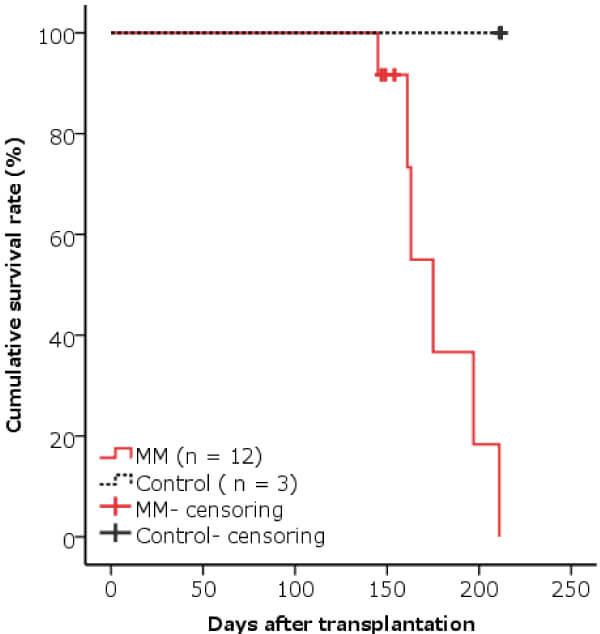
Kaplan-Meier curve of survival rate in the MM xenografts.
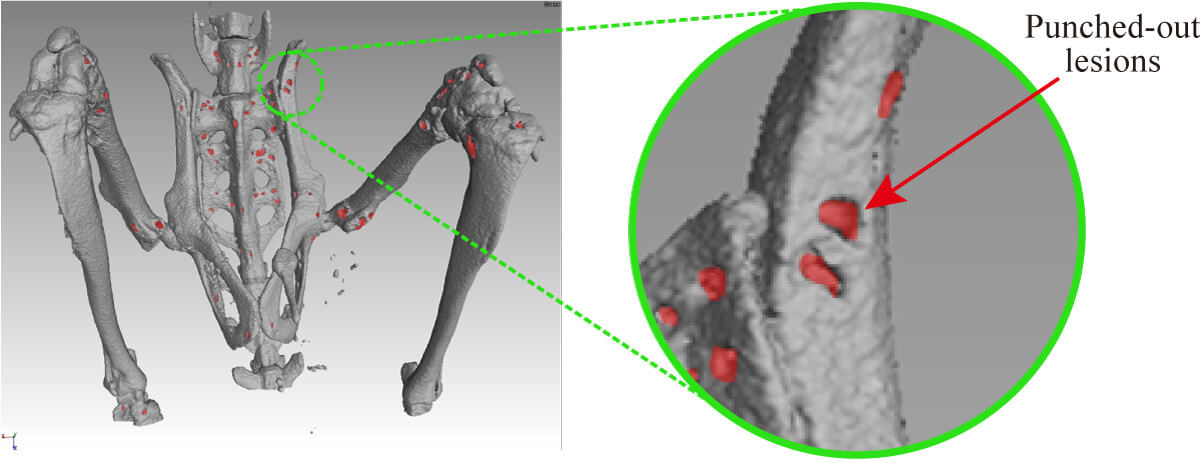
Punched-out lesions (red area) were clearly observed in femur, tibia, coxa and sacral vertebra of the mice using the three dimensional CT imaging.